


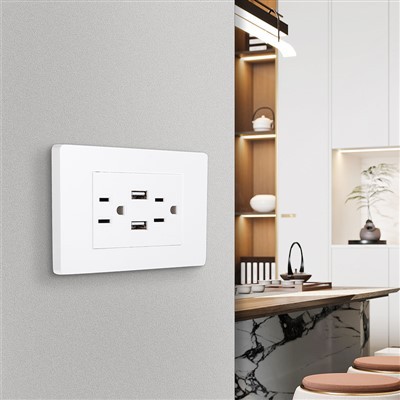
A wall socket, also known as an electrical outlet or power socket, is a device that provides a connection point for plugging in electrical appliances and devices. It allows electricity to flow from the electrical wiring in the wall to the plugged of an appliance, enabling it to function.Wall sockets come in various types and configurations to accommodate different types of plugs and power requirements. The most common types include two-prong outlets (for ungrounded devices) and three-prong outlets (with a grounding pin for added safety). Some wall sockets may also have additional features like USB charging ports or surge protection.
Accessibility
Wall sockets are strategically placed at various locations throughout a building, allowing for easy connection of electrical appliances and equipment. This accessibility promotes the efficient use of electrical power and facilitates daily activities.
Safety
When installed correctly and maintained properly, wall sockets provide a controlled and protected interface between electrical circuits and end-user devices. They include safety features such as child-resistant covers and grounded connections to reduce the risk of electric shock and fires.
Flexibility
Wall sockets come in various types and configurations, supporting different voltage levels and plug standards. This flexibility enables the connection of a wide range of devices, from small electronics to heavy-duty appliances.
Integration with Smart Home Systems
Modern wall sockets can be integrated into smart home automation systems, allowing users to remotely control and monitor the power usage of connected devices. This integration can lead to improved energy management and cost savings.
Convenience
With wall sockets readily available, there's no need for cumbersome extension cords or power strips in most situations, reducing clutter and tripping hazards while maintaining a neat and organized environment.
Expandability
As the needs of a structure evolve, additional wall sockets can be installed to meet new requirements without significant modifications to the electrical infrastructure.
Compatibility
Wall sockets are universally designed to be compatible with most commercially available electrical devices, making them a standard solution for electrical connectivity in homes, offices, and public spaces.
Support for Emerging Technologies
As technology advances, wall sockets are evolving to support new charging standards for electronic devices, including USB ports and fast-charging capabilities, which enhance the user experience and keep pace with innovation.




Why Choose Us
State-Of-The-Art Technology
We use the latest technology and tools to deliver high quality services. Our team is well-versed in the latest trends and advancements in technology and uses them to provide the best results.
Expertise and Experience
Our team of experts have years of experience in delivering high quality services to our clients. We hire only the best professionals who have a proven track record of delivering exceptional results.
Quality Assurance
We have a rigorous quality assurance process in place to ensure that all our services meet the highest standards of quality. Our team of quality analysts checks each project thoroughly before it is delivered to the client.
One-stop service
We promise to provide you with the fastest reply, the best price, the best quality, and the most complete after-sales service.
Competitive Pricing
We offer competitive pricing for our services without compromising on quality. Our prices are transparent, and we do not believe in hidden charges or fees.
Customer Satisfaction
We are committed to delivering high quality services that exceed our clients' expectations. We strive to ensure that our clients are satisfied with our services and work closely with them to ensure their needs are met.
Two-prong Outlets
These are the simplest type of wall socket and are usually ungrounded. They are often used for older appliances and devices that don't require a grounding connection.
Three-prong Outlets
These outlets have a grounding pin in addition to the two power pins. They provide added safety by allowing any electrical current to be diverted to the ground if there's a fault in the device.
USB Wall Sockets
These combine a traditional power socket with one or more USB ports, allowing you to charge electronic devices directly without a separate charger.
GFCI (Ground Fault Circuit Interrupter) Outlets
These are designed to protect people from electrical shock. They trip the circuit if they detect a ground fault, which can occur when moisture comes into contact with electrical wiring.


Tamper-resistant Outlets
These are designed to prevent children from inserting objects into the socket and potentially causing an electrical shock. They have special features that make it more difficult to insert foreign objects.
Surge-protected Outlets
These offer additional protection against power surges, which can damage electronic devices. They often include a built-in surge protector.
Decorative Outlets
These come in various styles and finishes to match the décor of a room. They may have different shapes or colors than standard outlets.
Multiple Outlet Wall Plates
These have more than one socket on a single plate, allowing you to connect multiple devices simultaneously.
How Are Wall Sockets Wired
Turn Off The Power: Before starting any electrical work, make sure to turn off the power to the circuit you'll be working on to prevent electrocution.
Remove The Old Socket (if Applicable): If replacing an existing socket, carefully remove it from the wall.
Unscrew The Faceplate: This reveals the back of the socket and the wiring connections.
Identify The Wires: Typically, there will be a black (hot), a white (neutral), and a grounding wire (usually bare or green).
Connect The Wires: Use a screwdriver to loosen the terminal screws and insert the wires into the correct terminals. The black wire goes to the brass screw, the white wire to the silver screw, and the grounding wire to the green screw or the grounding terminal.
Tighten The Screws: Make sure the wires are securely in place and the screws are tight enough.
Replace The Faceplate: Screw it back on to cover the wiring.
Turn The Power Back On: Test the socket by plugging in a device to make sure it works properly.It's important to note that electrical wiring should only be done by a qualified electrician or someone with proper electrical knowledge and training. Improper wiring can pose serious safety risks.
Can wall sockets be installed in outdoor areas
Yes, wall sockets can be installed in outdoor areas, but special considerations must be taken to ensure safety and durability. Outdoor electrical installations must comply with local building codes and electrical standards, which often require the use of weather-resistant components.
Here are key points to consider when installing outdoor wall sockets:
Weather-Resistant Materials
Outdoor sockets should be made from materials that are resistant to water and UV rays, such as those rated for outdoor use with a designation like "Weather-Resistant" (W-Rated) or "Polarized for Exterior Use" (H-Rated). These materials can withstand exposure to the elements without degrading quickly.
GFCI Protection
Ground Fault Circuit Interrupter (GFCI) protection is mandatory for all outdoor receptacles. GFCI protects against electric shock by monitoring electricity flowing into the outlet and cutting off power if it detects an imbalance, indicating that current is leaking away through a path such as water.
Conduit Protection
It is often recommended to use conduit to protect the wiring leading to the outdoor sockets. Conduit shields the wiring from physical damage and environmental factors like dirt, moisture, and rodents.
Electrical Code Compliance
Electrical installations must follow local codes and regulations, which may include specific requirements for outdoor wiring, conduit sizes, and grounding procedures.
Professional Installation
Due to the potential hazards and complexities involved, it's advisable to hire a licensed electrician to install outdoor wall sockets. They can ensure that all safety measures are followed and that the installation complies with local codes.
Location Considerations
Outdoor sockets should be placed away from areas prone to splashing water, such as near sprinklers or hoses, and at a safe distance from pools and hot tubs. They should also be easily accessible without stepping on damp ground or standing in water.
Insulation
Proper insulation of the wiring and connections is crucial to prevent moisture ingress and corrosion.
Electrical System Overview
Buildings are wired with electrical circuits that distribute power from a service panel or distribution board to various outlets throughout the structure. The service panel contains circuit breakers or fuses that control different circuits in the building and ensure safety by preventing overcurrent situations.
Wall Socket Components
A wall socket typically consists of two metal contacts or prongs (live and neutral) and sometimes a third prong (ground). In some countries, the order of the prongs may differ (live first vs. neutral first).
Connection to the Electrical Supply
When a plug from an appliance or device is inserted into the socket, it connects the live and neutral wires inside the plug to the corresponding contacts in the socket. This completes the electrical circuit, allowing current to flow from the power supply through the circuit to the device and back to the source, closing the loop.
Voltage and Current
The voltage rating of the socket (e.g., 110V, 220V, etc.) determines the potential difference between the live and neutral wires, which pushes the current through the circuit. The current rating of the socket indicates the maximum amount of current it can safely handle.
Safety Features
Modern wall sockets often have built-in safety features such as childproof latches to prevent accidental disconnection and tampering by children, and they are usually polarized to ensure that the plug is oriented correctly to reduce the risk of electric shock.
Circuit Protection
Each outlet is part of an electrical circuit that includes a circuit breaker or fuse in the service panel. If the current exceeds the safe limit due to a fault or overloading, the circuit protection device will trip or blow, disconnecting the circuit from the power supply to prevent damage and potential fire hazards.
Grounding
In many installations, a third grounding prong is present. This provides a path for electrical current to travel safely back to the earth in case of a fault, reducing the risk of electric shock.
A single socket, also known as a single receptacle, is an individual outlet that can accommodate one plug at a time. It is typically used for connecting a single electrical device or appliance to the power supply. Single sockets can be found throughout homes, offices, and other buildings to provide power to various devices.
On the other hand, a double socket, also known as a duplex receptacle or double receptacle, consists of two individual outlets that share a common connection to the electrical circuit. This allows two electrical devices or appliances to be plugged in and powered simultaneously from the same point on a wall. Double sockets are particularly useful in locations where multiple devices are likely to be used at once, such as near work surfaces, entertainment centers, or in high-traffic areas where multiple chargers and devices might need to be connected.
The main difference between a single socket and a double socket lies in their capacity to accommodate more than one plug at a time. While a single socket is limited to a single connection, a double socket offers the convenience of connecting two devices without the need for additional outlets nearby. Additionally, double sockets can help save space on walls since they combine the functionality of two separate single sockets into one unit. However, it's important to ensure that the combined load of both devices plugged into a double socket does not exceed the safe operating capacity of the circuit it is connected to.

What Is The Maximum Power Rating For A Wall Socket
The maximum power rating for a wall socket varies depending on several factors, including local electrical codes, the design of the socket, and the circuit it is connected to. Typically, the power rating of a socket is determined by its current rating, which is specified in amperes (A), multiplied by the standard supply voltage in volts (V).
For example, a common residential wall socket in North America is a 15-amp (15A), 120-volt (120V) socket, which would have a maximum power rating of approximately 15A x 120V = 1,800 watts (W). In contrast, a higher capacity socket might be rated for 20A at 120V, providing a maximum power rating of 2,400W.
In Europe and many other regions, the standard domestic supply voltage is 230V, and wall sockets may have current ratings ranging from 10A to 16A, resulting in maximum power ratings of approximately 2,300W to 3,680W.
It's essential to consult local electrical codes and standards, as they provide the specific requirements for the maximum current and power ratings allowed for different types of circuits and applications. Additionally, the circuit breaker or fuse protecting the socket should be rated at or below the maximum current rating of the socket to ensure safety and prevent overloading. Always consult with a qualified electrician or check the manufacturer's specifications for the exact maximum power rating of a particular wall socket.
Can I install a wall socket myself or do I need a professional
Whether you can install a wall socket yourself depends on your familiarity with basic electrical work, local regulations, and the specific circumstances of the installation.
In many regions, any work involving the wiring and installation of new electrical outlets, including wall sockets, must comply with strict building and safety codes. These codes are in place to protect individuals from electrical hazards and to ensure that all electrical installations are properly grounded and wired.
If you are considering installing a new wall socket yourself, here are some key points to consider:
Local Regulations
Check local building codes and electrical regulations. Some jurisdictions require permits for electrical installations, and all work must be inspected and approved by local authorities before the power is turned back on.
Safety First
Working with electricity can be dangerous. If you are not trained in electrical work, there is a significant risk of electric shock or causing fires.
Tools and Knowledge
Proper installation requires specific tools and knowledge of how to work with electrical systems, including understanding wiring diagrams and the ability to use multimeters and other testing equipment.
Existing Wiring
You need to know how to safely access the existing electrical box and wiring without interrupting the power supply or creating a hazard.
Circuit Breakers
You must know how to turn off the power at the correct circuit breaker and verify that the power is off using a voltage tester before beginning any work.
Grounding and Bonding
Correct installation involves ensuring proper grounding and bonding of the socket to the electrical system.
Permits and Inspections
In many cases, you will need to obtain a permit before starting the work and arrange for an inspection once the job is complete to ensure compliance with all regulations.
How do I test a wall socket to ensure it is functioning properly
Plug in a lamp or other small appliance to see if it gets power. If the device turns on, the socket is likely working fine.
These tools can measure the electrical output of the socket. Set the tester to the appropriate voltage range and touch the probes to the socket's terminals to check for voltage.
Inspect the socket for any visible signs of damage, such as loose wires, cracks, or burns. If you see any damage, it may be a sign that the socket needs repair or replacement.
A properly grounded socket is important for safety. Use a grounding tester to ensure the socket is grounded correctly.
If you're having issues with one socket, it's a good idea to test other sockets in the same circuit to see if the problem is isolated.
A single socket wall outlet, also known as a single receptacle, is an individual electrical outlet that can accept only one plug at a time. This type of outlet is typically used for powering a single device or appliance.
A multiple socket wall outlet, also referred to as a multi-outlet, power bar, or surge protector, contains two or more individual receptacles, allowing for the simultaneous connection of multiple devices or appliances. These units can vary widely in design, features, and capacity, offering anywhere from two to numerous outlets in a single unit. They may come with built-in surge protection to guard against power surges that could damage connected electronics.
The primary differences between single and multiple socket wall outlets include:
Connectivity: A multiple socket outlet provides the convenience of connecting more than one device to a single point on a wall, whereas a single socket outlet can only connect one device.
Versatility: Multiple socket outlets are often designed with additional features like USB ports, rotating or pivoting plug sockets for better cable management, and on/off switches.
Power Distribution: With multiple devices plugged into the same circuit, it's crucial to ensure that the combined power draw does not exceed the circuit's capacity to avoid overloading.
Safety: Overloaded circuits can lead to electrical fires. It is safer to distribute the load across multiple circuits by using multiple socket outlets strategically rather than plugging too many devices into a single socket.
Convenience: Multiple socket outlets are especially useful in areas where devices frequently need charging or use, such as near workstations or in living rooms.
Our Factory
After decades development, Mr. Alan collaborate his classmate to spend investment in a factory in 2019 in Guangdong province. This factory is located in Zhongshan city, Guangdong province. It covers 24000 square meters land. Owning convenient transportation, it is close to the big port Guangzhou.

FAQ
Q: How do wall sockets work?
Q: What is the difference between a single socket and a double socket?
Q: Are all wall sockets the same?
Q: How many watts can a typical wall socket handle?
Q: Can I install a wall socket myself?
Q: What is the difference between a grounded and ungrounded socket?
Q: Why does my wall socket feel warm?
Q: Can I use a power strip with a wall socket?
Q: What is the standard height for installing a wall socket?
Q: How do I know if my wall socket is working?
Q: What is a GFCI socket, and why is it important?
Q: How do I reset a tripped GFCI socket?
Q: What is a surge protector socket, and how does it work?
Q: Can I replace a regular socket with a surge protector socket?
Q: What should I do if my wall socket is damaged?
Q: How often should I replace my wall sockets?
Q: Can I install a USB port in a wall socket?
Q: What is a smart wall socket, and what can it do?
Q: How do I choose the right wall socket for my needs?
Q: What is the difference between a switched and an unswitched wall socket?
As one of the most professional wall socket manufacturers and suppliers in China, we're featured by quality products and good service. Please rest assured to wholesale cheap wall socket from our factory.
2 gang switch with 1 dimmer, Wireless Remote Light Switch, 2 way electrical switch